
Legendary horror films maintain their power to terrify through masterful psychological manipulation and groundbreaking cinematic techniques that revolutionized filmmaking. From Universal’s iconic monsters to modern psychological thrillers, horror continues evolving while tapping into humanity’s deepest fears. Directors like Hitchcock and Peele transformed simple scares into nuanced social commentary, using innovative effects and storytelling to create enduring nightmares. The genre’s ability to reflect cultural anxieties while pushing creative boundaries ensures these classics hold dark secrets waiting to be uncovered.
The Evolution of Terror: From Silent Screams to Modern Nightmares
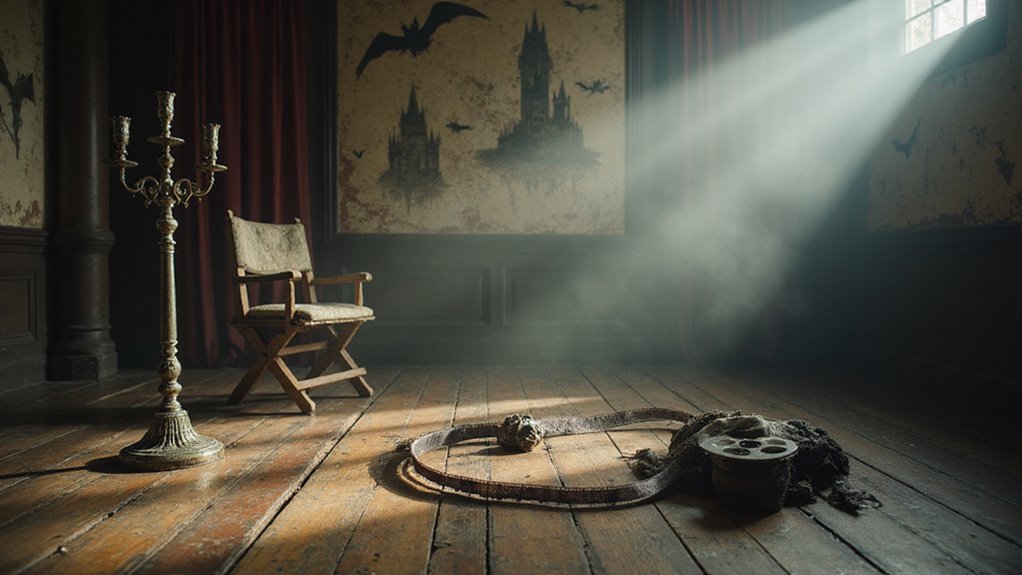
The 1930s ushered in horror’s voice, as Universal’s monsters growled and howled their way into cultural consciousness. Bela Lugosi’s Dracula became the definitive vampire portrayal that haunted audiences for generations.
Universal’s classic monsters roared to life in the 1930s, forever embedding their haunting presence in our cultural DNA.
When censorship forced restraint in the 1940s, directors like Val Lewton turned limitations into assets, mastering the art of suggested horror. German Expressionism had already proven that visual style could evoke deep psychological terror without explicit violence.
By the 1950s, Hammer Films splashed Gothic terror in vivid color, while Cold War anxieties birthed atomic-age nightmares. The Thing From Another World and similar films tapped into widespread fears of foreign invasion during this era.
This creative evolution culminated in the late 1960s, when *Night of the Living Dead* proved horror could serve up both visceral scares and biting social commentary, forever changing how audiences process fear on screen.
Breaking Boundaries: Horror’s Most Influential Game-Changers
Throughout cinema history, certain groundbreaking horror films have shattered artistic and technical boundaries, fundamentally reshaping audience expectations and industry standards. From the surreal, shadowy landscapes of German expressionism to the blood-soaked birth of the modern zombie, these pioneering works transformed fear into art. Shadow play and superimposition techniques pioneered in Nosferatu set new standards for visual storytelling in horror.
The slasher subgenre emerged with its masked killers and “final girls,” while demonic possession narratives pushed censorship limits and sparked moral panic. These innovations weren’t just technical achievements—they represented seismic shifts in storytelling, using horror as a lens to examine societal issues like racism, religion, and cultural upheaval. Modern horror productions leverage AI-powered cameras to enhance the quality of nightmarish shots and atmospheric scenes.
Low-budget ingenuity often yielded spectacular results, with indie productions becoming box office phenomena that spawned endless imitators. Directors like Hitchcock revolutionized the genre with psychological suspense rather than supernatural threats. Whether through groundbreaking special effects, psychological manipulation, or raw social commentary, these films established templates that horror creators still reference today.
Their influence extends beyond genre conventions, having earned critical acclaim and preservation in prestigious film archives, proving that nightmares can indeed become high art.
Beyond Fear: How Horror Films Shape Cultural Discourse
Moving beyond their revolutionary impact on filmmaking techniques, horror films serve as powerful mirrors reflecting society’s deepest fears and anxieties. From early films that reinforced traditional gender roles to modern works tackling systemic racism and social injustice, the genre has evolved into a vital platform for cultural discourse.
Jordan Peele’s “Get Out” exemplifies this transformation, using horror conventions to expose and critique racial prejudices that lurk beneath polite society. The genre offers viewers a chance for emotional release through safe exploration of their darkest fears.
The genre’s ability to process collective trauma proves particularly relevant in post-9/11 cinema and during the COVID-19 era, with films like “The Strangers” and “Paranormal Activity” tapping into fears about domestic security and surveillance. Films like “28 Days Later” capture widespread anxieties about genetic manipulation and its potential consequences.
Contemporary “intelligent horror” works such as “Hereditary” and “Midsommar” delve deeper, exploring psychological manipulation and familial trauma while challenging viewers intellectually.
This evolution from simple scares to nuanced social commentary has established horror as an essential medium for confronting society’s uncomfortable truths and initiating crucial conversations about cultural change.
Frequently Asked Questions
How Did Censorship Restrictions Affect Early Horror Film Production and Distribution?
Censorship dramatically shaped early horror cinema through strict content regulations and market restrictions.
The 1934 Hays Code mandated that monsters must die by film’s end, while British censors demanded cuts to violent scenes and implemented the “H” rating for frightening content.
These constraints forced studios like Universal to scale back horror production, leading to creative stagnation in the late 1930s until profitable re-releases sparked renewed interest.
Which Horror Films Have Been Banned Worldwide and Why?
Several horror films have faced international bans due to extreme content, including “Cannibal Holocaust” for its real animal cruelty and alleged snuff footage, “Faces of Death” for mixing authentic and staged death scenes, and “I Spit on Your Grave” for graphic sexual violence.
“Men Behind the Sun” was banned for its disturbing portrayal of war atrocities, while “Saló” faced censorship worldwide for explicit sadistic content and sexual torture themes.
What Percentage of Horror Films Were Directed by Women Before 1990?
Prior to 1990, women directed approximately 5.9% of horror films, a figure that reflected the broader industry’s gender disparities yet surpassed representation in action (2.6%) and sci-fi (2.8%).
While women maintained stronger presence in screenwriting and editing roles, comprising 20-25% of horror screenwriters between 1911-1930, directorial opportunities remained severely limited, with major studios rarely entrusting women to helm horror productions during this era.
How Did Religious Organizations Respond to Supernatural Horror Films?
Religious organizations responded to supernatural horror films with a mix of censorship and cautious engagement.
The Church of England actively blocked certain horror productions from filming in churches, while the Catholic Church took a more nuanced approach, seeing horror as a potential vehicle for exploring evil and redemption.
Some religious groups protested films like The Exorcist, though others recognized horror’s ability to reinforce Christian theology through popular media.
What Were the Average Budgets for Classic Horror Films Versus Returns?
Classic horror films operated on remarkably lean budgets, typically under $10 million, while generating astronomical returns.
The Exorcist, produced for $12 million in 1973, earned $441 million worldwide, while Jaws, made for $9 million in 1975, raked in $470 million.
This efficient model established horror’s reputation for exceptional ROI, with even modest productions regularly achieving 150-200% returns on investment, dwarfing other genres’ profit margins.