
Film noir classics endure because they tap into timeless human struggles with morality and fate. Through stark chiaroscuro lighting and Dutch angles, these films create a visual poetry that amplifies psychological tension. Their morally compromised characters navigate shadowy urban landscapes while grappling with post-war disillusionment that still resonates today. From femme fatales to wounded antiheroes, noir’s exploration of institutional decay and social alienation offers a dark mirror that continues to seduce modern viewers seeking deeper truths beneath the surface.
The Timeless Appeal of Moral Ambiguity
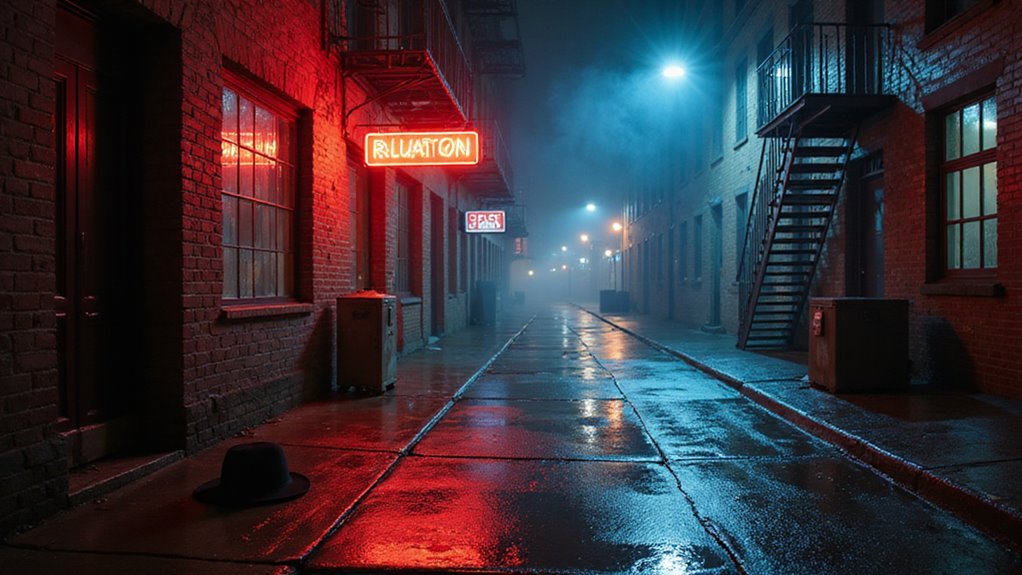
While many film genres rely on clear-cut heroes and villains, film noir’s enduring allure stems from its embrace of moral ambiguity, where characters navigate a shadowy realm between right and wrong. In classics like “Double Indemnity” and “The Maltese Falcon,” protagonists wrestle with their darker impulses, making choices that blur the line between hero and antihero as they pursue their desires through rain-slicked city streets. Dutch angle shots frequently emphasize the psychological unease of characters grappling with difficult decisions.
The urban landscape itself becomes an accomplice in this moral complexity, with its labyrinthine alleyways and neon-lit establishments serving as proving grounds where conventional ethics dissolve into shades of gray. These settings masterfully employ shadow and light to heighten the psychological tension of each scene. Billy Wilder’s in-camera editing techniques helped establish the genre’s distinctively dark visual style.
Characters like Sam Spade operate by personal codes rather than societal norms, their decisions shaped by pragmatism rather than virtue. This realistic portrayal of flawed humanity, trapped in the web of consequences and fate, continues to resonate with audiences who recognize their own moral uncertainties in these shadowy tales.
Dark Shadows and Dangerous Desires: Noir’s Visual Poetry
The interplay of light and shadow in film noir creates a visual language as potent as any spoken dialogue, transforming urban landscapes into atmospheric poems of darkness and desire. Through high-contrast lighting and chiaroscuro techniques, noir directors paint their morally ambiguous tales across rain-slicked streets and smoky bars, where every shadow tells a story and each neon sign hints at danger lurking nearby. Cinematographer John Alton pioneered what he called “mystery lighting” to enhance dramatic situations and psychological tension. Low-key lighting techniques intensify the psychological horror that permeates these dark narratives.
The visual poetry deepens through radical camera angles and complex compositions, with Dutch tilts and frames-within-frames creating a sense of psychological unease that mirrors characters’ inner turmoil. These visual elements align with what Paul Schrader analyzed in his influential examination of noir’s distinctive style.
At the heart of this shadowy world stands the femme fatale, her presence amplified by strategic lighting that turns venetian blind shadows into prison bars across her face. The urban nightscape becomes her natural habitat, where she rules over a realm of wet pavement and flickering neon, seducing both her on-screen victims and generations of audiences with equal ruthlessness.
From Post-War Anxiety to Modern Alienation
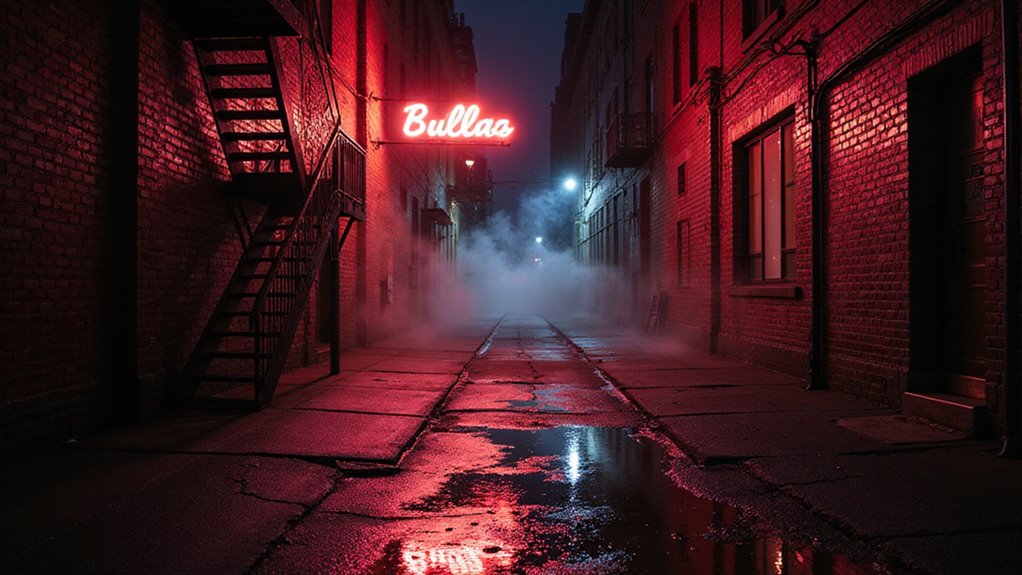
Beneath the surface glamour of post-war prosperity, film noir captured the deep psychological wounds and societal fractures that defined mid-century America, giving voice to veterans who returned home as strangers in their own land.
While victory parades celebrated triumph, films like “The Maltese Falcon” exposed the hollowness of the American Dream, portraying a world where success meant selling your soul to the highest bidder.
The genre’s shadowy streets and seedy environments became more than just moody backdrops – they reflected the crushing isolation felt by those navigating an increasingly paranoid society.
House Un-American Activities Committee investigations created a climate of suspicion that drove many filmmakers to explore darker themes and narratives.
The stark visual style of German Expressionism heavily influenced how these films portrayed urban decay and moral corruption.
Characters in “The Big Heat” and “Killer’s Kiss” wandered through concrete jungles like wounded animals, trapped in a web of corruption and disillusionment.
These themes continue to resonate today, as modern audiences recognize their own anxieties about institutional decay, social fragmentation, and the elusive pursuit of belonging in noir’s stark mirror.
Frequently Asked Questions
Which Film Noir Movies Were Considered Box Office Failures but Later Became Classics?
Several influential film noirs flopped at release before achieving classic status, including Charles Laughton’s haunting “The Night of the Hunter” (1955), John Huston’s “The Treasure of the Sierra Madre” (1948), and “The Asphalt Jungle” (1950).
Later noir-influenced films like “Blade Runner” (1982) and “Fight Club” (1999) also struggled commercially before being embraced by critics and audiences, proving that noir’s shadowy appeal often requires time to fully develop.
How Did Censorship Rules Influence the Development of Film Noir Storytelling?
The Production Code’s strict moral guidelines paradoxically shaped film noir’s signature style, forcing directors to employ creative visual techniques and subtle storytelling.
Rather than showing explicit violence or sexuality, filmmakers used shadows, symbolism, and suggestive dialogue to convey darker themes.
This censorship pressure birthed noir’s characteristic elements – from femme fatales cleverly skirting moral boundaries to criminal plots requiring poetic justice.
What Role Did Method Acting Play in Shaping Noir Performance Styles?
Method acting revolutionized noir performance by introducing psychological realism and emotional authenticity to the genre’s shadowy world.
Through the techniques pioneered by Strasberg and Adler, actors like Brando and Clift brought raw intensity and naturalistic delivery to their roles, abandoning theatrical melodrama for nuanced character work.
This emphasis on lived-in performances and emotional truth amplified noir’s themes of alienation and moral ambiguity, creating characters whose inner turmoil felt viscerally real.
Which Film Noir Techniques Were Borrowed From German Silent Cinema?
German silent cinema gifted film noir its most iconic visual elements, including high-contrast chiaroscuro lighting that carved stark shadows across faces and sets.
Directors borrowed expressionistic techniques like tilted “Dutch” angles, asymmetrical compositions, and distorted perspectives to create psychological unease.
The use of elaborate studio sets, dramatic shadows, and symbolic props emerged directly from German cinema’s artistic legacy, while émigré filmmakers like Fritz Lang brought these methods to Hollywood.
How Did Radio Noir Programs Influence the Development of Film Noir?
Radio noir programs profoundly shaped film noir through several key innovations: first-person narration techniques that would later define classics like Double Indemnity, sophisticated jazz-influenced musical scores that enhanced psychological tension, and masterful sound design incorporating strategic silences and whispers.
Radio’s emphasis on psychological complexity and moral ambiguity through voice-overs and atmospheric audio cues created the template for film noir’s signature brooding style and unreliable narrators.